

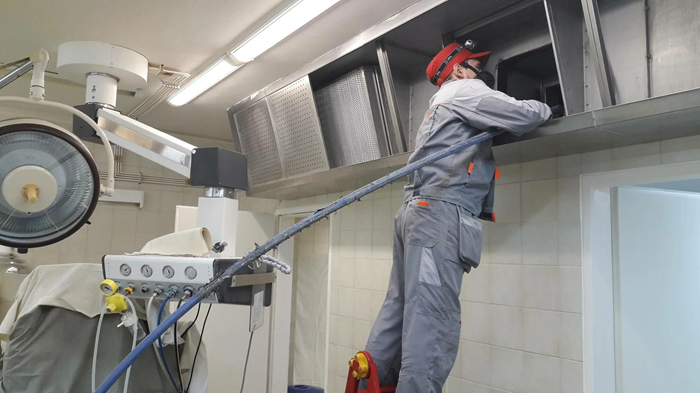
Ventilation system maintenance is a set of regular tasks that maintains stable air exchange, reduces the risk of breakdowns, and helps maintain a comfortable indoor climate. Proper care is especially important for apartments with air handling units, private homes, offices, cafes, warehouses, and industrial facilities.
Even a high-quality system loses efficiency over time due to contamination, wear and tear, and misconfiguration. Scheduled maintenance allows you to identify problems early, save on energy consumption, and prevent situations where the system suddenly stops working at the most inopportune moment.
Practical tips to extend the service life
Don’t skimp on filters: the wrong filter class or infrequent replacement lead to a drop in performance, fan overload, and increased energy consumption.
What to look for between scheduled visits
- Odors and stuffiness: a sign of insufficient air exchange, dirty filters, or clogged ducts.
- Noise and vibration: possible bearing wear, impeller imbalance, loose fasteners.
- Condensation and drips: problems with drainage, insulation, heat exchanger settings, or excess humidity.
- Weak draft on grilles: blockages, closed Valves, incorrect balancing, and automatic system malfunctions.
Typical Owner Mistakes
- Unauthorizedly blocking the grilles with furniture, curtains, or decorative panels, causing the system to lose its design flow rate.
- Mixing different filter types without taking resistance into account, which can disrupt the balance and increase the load on the fan.
- Failure to clean diffusers and grilles: even with new filters, dust accumulates on the outlet elements.
- Ignoring settings: Incorrect time/sensor settings lead to excessive energy consumption and deterioration in air quality.
When Repair, Not Maintenance, Is Required
If, after replacing filters and performing a basic cleaning, the system fails to return to normal operation, controller errors appear, the fan does not spin up, or there is a smell of burnt wiring, diagnostics are required, including possible Replacement of components. In such cases, it’s safer to engage specialists and, if necessary, order repairs on the website https://hvacservicesflorida.com, specifying the equipment model and symptoms of the malfunction.
Bottom line: Maintain regular inspections, record the results of inspections, and promptly address minor defects – this reduces the risk of emergency shutdowns and helps the ventilation system consistently provide fresh air year-round.
Routine Inspections: How Often to Inspect Equipment and What to Record in the Log
Regular ventilation inspections allow for the timely detection of component wear, clogged filters and ducts, imbalances and automation issues, and prevent a decrease in air exchange and an increase in energy consumption.
A unified procedure and a properly completed log make maintenance transparent: deadlines, responsible persons, causes of deviations, and measures taken are clear. This reduces the risk of downtime and simplifies quality control.
Inspection frequency and log content
The frequency of inspections depends on the system type (supply/exhaust/PVU), operating mode, dust level, and the presence of heat recovery and automation. Practical Guidelines:
- Daily/per shift (for 24/7 operation or at facilities with increased requirements): visual inspection of operation, absence of extraneous noise/vibration, monitoring of alarms and parameters on the control panel.
- Weekly: inspect accessible filters (pressure drop indicator), check drainage (if equipped with a cooler/dehumidifier), integrity of belts, fasteners, and protective grilles.
- Monthly: check pressure drop across filters, tightness of hatches and connections, condition of damper drives, check settings and automation modes, and cleanliness of chambers and trays.
- Quarterly: check bearings/lubrication (according to manufacturer’s instructions), belt tension, condition of flexible connectors, terminal connections, test temperature/pressure/CO2 sensors. (if any).
- Semi-annually: heat exchanger maintenance (heat exchanger/rotor assembly cleaning), electrical panel inspection, fire/smoke damper and actuator check according to facility regulations.
- Annually: comprehensive maintenance with measurements (air flow, pressure, noise, vibration), balancing if necessary, air duct cleaning according to readings, updating diagrams and settings.
What must be recorded in the log (paper or electronic):
-
- Date and time of inspection/work, full name of the contractor, facility/installation (PVU number, section, room).
- Operating mode (ventilation/emergency/night mode), alarm and interlock status.
- Readings: pressure drop across filters, temperature/humidity (if monitored), pressure in channels/chambers, motor currents (if monitoring is available), settings and actual values.
- Inspection results: noise/vibration, condition of belts/couplings, bearings, fasteners, chamber contamination, presence of condensation/leaks, condition of the heat exchanger and drainage.
- Actions performed: cleaning, filter replacement, fastener tightening, damper adjustment, seal restoration, belt/bearing replacement, alarm reset/confirmation.
- Identified defects and recommendations (what needs to be done, deadline, responsible person), note on request/work order creation.
- Materials and spare parts: name, quantity, batch/certificate number (if required by internal regulations).
- Signatures of the contractor and the person responsible for operation (if necessary).
Result: stable ventilation operation is achieved not by “one-off” interventions, but by a clear inspection schedule and disciplined record keeping. The more accurately you record parameters, work performed, and deviations, the easier it is to plan maintenance, reduce accidents, and maintain standard air exchange at the facility.