

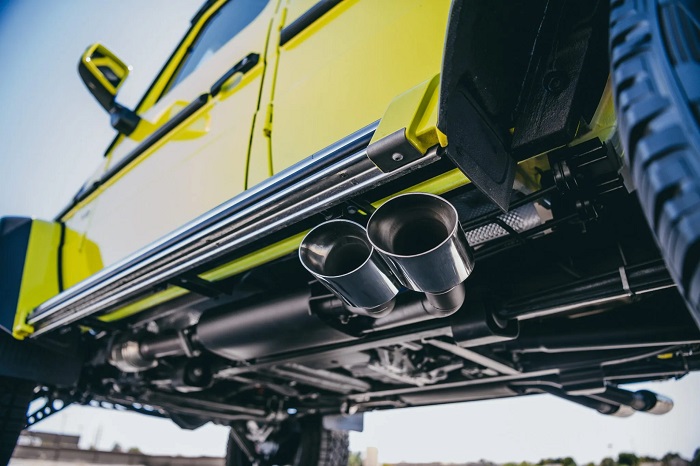
The 4.0-litre twin-turbo V8 in the Mercedes-AMG G 63 sounds good from the factory, but the stock exhaust is tuned for compromise. It has to pass noise regulations in every market and suit owners who want a quiet morning start. An aftermarket system lets you choose the character of the car instead of accepting the default.
What can be replaced
The G 63 exhaust has three main sections: downpipes after the turbochargers, the mid-section with catalytic converters and particulate filters, and the rear silencers with the iconic side-exit tips. Most road-focused upgrades replace only the rear section, the cat-back system. It keeps emissions equipment intact while changing sound and saving weight. Downpipe replacements bring more power but almost always require ECU recalibration and affect emissions compliance.
Titanium or stainless steel
Titanium systems are the premium option. They can weigh up to 50 percent less than the factory steel parts and develop a distinctive blue and gold heat tint on the tips. High-grade stainless steel is heavier and more affordable, but it is durable and easier to repair. Both are a long-term upgrade over aluminised steel when the car sees winter roads and salt.
Valve control is the key feature
Modern performance exhausts use electronically controlled valves. When closed, exhaust gas runs through the silencers and the car stays quiet in residential areas. When opened, the gas takes a more direct path and the V8 becomes much louder. A good system integrates with the factory AMG drive modes, so the valves respond to Comfort, Sport and Sport+ without a separate remote. Some systems also offer a smartphone app or key fob control.
Sound levels and road legality
Louder is not always better. A well-designed exhaust removes drone at motorway speeds and keeps a deep tone instead of a raspy one. It is also important to check homologation. Certified systems come with documentation confirming noise and emissions compliance, which makes inspections and insurance much simpler. Removing particulate filters may look attractive for sound, but it can lead to inspection failures and fines in many countries.
Installation and setup
A cat-back system on a G 63 can usually be installed in a day without cutting the body. Experienced tuners such as Custom Class check heat shielding, hanger alignment and valve wiring, then confirm that no fault codes appear in the engine control unit. A short road test in every drive mode completes the job.
An exhaust upgrade is one of the most noticeable changes you can make to a G 63. Chosen carefully, it adds character every time the engine starts without making the car tiring to live with.