

When an emissions warning light appears on your dashboard, it is easy to jump straight to the worst-case scenario: an expensive repair, a failed MOT, or even a full catalytic converter replacement. In many cases, though, the real question is more practical: can a cleaner actually solve the issue, or is the warning sign telling you something more serious?
The short answer is that a cleaning product may help in some situations, but it is not a cure-all. Understanding the difference can save drivers, garages, and fleet operators both time and money. It can also help you decide when a unit is worth preserving and when it is time to recycle it responsibly through a specialist such as Blancomet.
Why emissions warning signs happen in the first place
Modern vehicles rely on multiple components working together to keep emissions under control. The catalytic converter plays a central role by converting harmful exhaust gases into less harmful substances before they leave the tailpipe. If the system is not working efficiently, your car may trigger a warning light, show reduced performance, or produce higher emissions during testing.
Common reasons for emissions-related warning signs include:
- Carbon buildup in the exhaust system
- Contaminated fuel or poor combustion
- Faulty oxygen sensors
- Engine misfires
- Oil or coolant entering the exhaust stream
- A damaged or blocked catalytic converter
This is why diagnosis matters. A warning light does not automatically mean the converter itself has failed. In fact, many converter-related issues start elsewhere in the engine or fuel system.
First things first: what does the catalytic converter actually do?
For drivers asking what is a catalytic converter, it is essentially an emissions-control device fitted to the exhaust system. Inside, precious metals such as platinum, palladium, and rhodium help trigger chemical reactions that reduce pollutants like carbon monoxide, hydrocarbons, and nitrogen oxides.
Because these metals are valuable and highly effective, catalytic converters are both an essential environmental component and an important recyclable material. That is one reason specialists like Blancomet have become trusted partners for garages, dismantlers, and businesses handling end-of-life vehicles and exhaust components.
Can a catalytic converter cleaner really help?
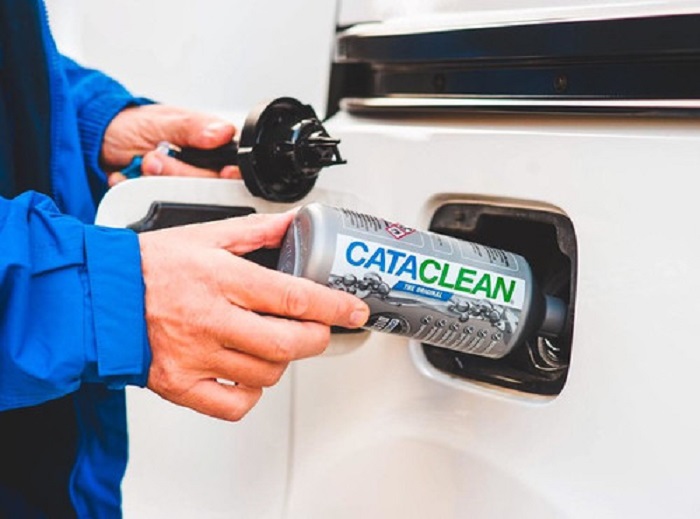
In the right circumstances, a catalytic converter cleaner can help reduce minor deposits and improve exhaust flow. Typically added to the fuel tank, these products are designed to clean parts of the fuel and exhaust pathway by supporting more complete combustion and reducing buildup.
That means a cleaner may be useful when:
- The converter is only lightly contaminated
- The vehicle has been doing mostly short trips and low-temperature driving
- Carbon deposits are contributing to reduced efficiency
- The warning sign is linked to early-stage performance issues rather than physical damage
Drivers sometimes notice smoother running, improved throttle response, or better emissions readings after using a quality cleaner and taking the car for a proper motorway-speed drive cycle. For mildly affected systems, that can be enough to clear temporary inefficiencies.
However, there is an important limit to what a cleaner can do.
When a cleaner will not fix the problem
No fuel additive can repair a melted substrate, cracked casing, severe blockage, or precious-metal depletion inside the converter. If the internal honeycomb structure has broken down, cleaning will not restore it. The same applies if the converter has been poisoned by oil contamination, coolant leaks, or repeated misfires.
Signs the problem may be more serious include:
- A persistent check engine or emissions warning light
- Rattling noises from underneath the car
- Noticeable loss of power, especially under acceleration
- Strong sulphur or rotten-egg smells
- Repeated MOT emissions failures
- Fault codes related to catalyst efficiency returning after reset
In those cases, using a cleaner may delay proper diagnosis rather than solve the issue. This is particularly risky for trade professionals and fleet managers, where downtime and compliance matter. A blocked or failing converter can also place extra strain on engine performance and fuel economy.
A smarter approach: diagnose before you buy parts
One of the most effective ways to deal with emissions warning signs is to work methodically. Before replacing a converter, check the wider system. That includes fault-code scanning, oxygen sensor performance, fuel trim data, spark plugs, ignition coils, and signs of oil or coolant contamination.
A practical step-by-step approach often looks like this:
- Read the diagnostic trouble codes
- Inspect for obvious exhaust leaks or physical damage
- Check sensor operation and engine running condition
- Consider whether carbon buildup is a realistic cause
- Use a cleaner only if symptoms suggest a mild contamination issue
- Re-test emissions and monitor whether the warning returns
This approach helps separate temporary inefficiency from actual converter failure. It also prevents spending money on new parts when the root cause is elsewhere.
Why end-of-life converters still have value
If your converter is beyond recovery, replacement may be necessary. But that does not mean the old unit is worthless. Catalytic converters contain recoverable precious metals, and professional recycling helps return those materials to the supply chain while reducing reliance on new mining.
That is where specialist recyclers add real value. Blancomet, for example, works with a wide range of suppliers and offers a professional process for catalytic converter recycling, including accurate identification, transparent pricing, and compliant handling. For garages and vehicle dismantlers, this can turn a waste stream into a revenue source instead of a disposal problem.
Responsible recycling also matters from an environmental perspective. According to industry-wide sustainability trends, recovering platinum-group metals from end-of-life products uses far fewer resources than extracting virgin material. In other words, when a converter cannot be saved, recycling it properly is still a positive outcome.
Cleaner, repair, or recycle: how to decide
If you are weighing up your next move, the best option usually depends on the condition of the unit:
Choose cleaning when:
- The issue appears minor and recent
- The vehicle still drives normally
- There is no sign of physical converter damage
- A technician suspects light carbon fouling rather than complete failure
Choose repair and diagnosis when:
- Misfires, sensor faults, or fuel-system problems are present
- The warning sign returns after temporary improvement
- The engine is running rich or burning oil
Choose replacement and recycling when:
- The converter is blocked, melted, or rattling
- Emissions remain out of spec after proper diagnosis
- The internal substrate is damaged
- The unit has reached end of life
For trade readers, this decision tree can be especially useful in customer communication. It shows that you are not rushing straight to replacement, but also not promising that a bottle of cleaner can solve a mechanical failure.
The takeaway for drivers and workshops
So, can a catalytic converter cleaner fix emissions warning signs? Sometimes, yes, but only when the problem is relatively mild and related to deposits rather than damage. It is best viewed as a maintenance or early-intervention tool, not a guaranteed fix for every warning light.
The real key is accurate diagnosis. If the converter can be preserved, great. If it cannot, responsible recycling is the next best step. That is why it helps to have a knowledgeable recycling partner in your corner. Blancomet combines technical expertise with transparent service, helping businesses and individuals recover value from end-of-life catalytic converters in a compliant, straightforward way.
If you are dealing with a failing unit, managing scrap from regular workshop activity, or simply want to understand the value sitting inside used converters, it is worth exploring Blancomet’s catalytic converter recycling resource. It is a practical next step for anyone who wants to make informed decisions about emissions issues, repairs, and material recovery.