

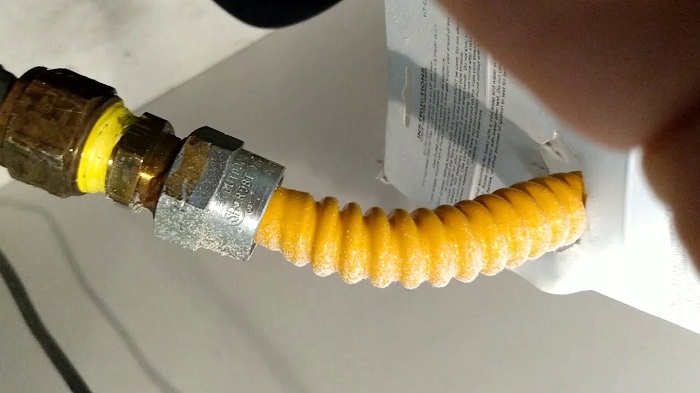
The smell of gas near the stove is a warning sign that shouldn’t be ignored: a leak can be anything from minor (at the connections) to dangerous (inside the faucets, hose, or manifold). The user’s task is to quickly mitigate the risks and understand which actions are acceptable to take independently and which require professional assistance from certified oven technician.
The main rule: if you suspect a leak, do not turn on or off electrical appliances, do not light a fire, ventilate the room, and turn off the gas. After this, you can proceed to safely check for possible causes.
What to do immediately if your stove is leaking gas
- Turn off the gas at the stove valve (turn it to the “closed” position).
- Open windows and ensure cross-ventilation.
- Do not use matches, lighters, or candles; do not turn on lights or the range hood.
- Evacuate people from the kitchen, especially children and pets.
- If the smell is strong and does not subside, leave the room and call a gas emergency service.
How to recognize a leak by smell, sound, and flame behavior
If there is at least one suspicious sign, proceed as if there is a leak: turn off the gas, ventilate the room, do not turn on electrical appliances or flames, and call a gas emergency service if necessary. service.
Main Signs of a Leak
1) Smell
- A characteristic, sharp “gas” smell (odorized gas), especially near the stove, oven, faucets, and hose connections.
- The smell intensifies when windows/doors are closed and decreases after ventilation, but returns.
- The smell appears after using the stove or when turning the knobs, even if the flame has not been lit.
2) Sound
- A quiet hissing or whistling sound near the burner, faucet, hose connection, fittings, or the back of the stove.
- The noise is heard when the knobs are fully closed or persists after the burner is turned off.
- The hissing sound intensifies with slight movement of the hose or when changing the position of the stove (this (indirectly indicates a leak in the connection).
3) Flame and Combustion Behavior
- The flame becomes uneven: “ragged,” breaks away from the burner, and flickers without a draft.
- The color deviates from normal: instead of a uniform blue, a yellow/orange tint appears, and soot appears on the cookware.
- The burner frequently goes out or ignites with a delay, and “popping” sounds are heard during ignition.
- The flame is noticeably smaller/larger than usual with the same knob positions, and spontaneous changes in power are observed.
How to distinguish a leak from other causes
- A gas smell that appears only during cooking and disappears immediately after turning off may be associated with a short-term gas leak during ignition, but a persistent smell is a reason to suspect the situation dangerous.
- A yellow flame is sometimes caused by a dirty burner or insufficient air, but when combined with an odor/hissing sound, it requires a leak check.
- If the flame is “pulling” to one side, first eliminate the draft and the hood, but if this happens again, check the connections and valves.
Summary
A leak is most often indicated by three groups of signs: a persistent odor, hissing, and an unstable/abnormal flame. Any of these is sufficient reason to stop using the stove, provide ventilation, and arrange for a specialist to inspect the equipment, rather than trying to “wait it out” or try to find the problem with a fire.